rCP
A phone-only cardiac-metrics app, rebuilt into a regulated medical device at electronRx.
By the end of the year I was the engineer chosen from five to lead the team — reviewing all code, managing TestFlight and hitting every deadline while the lead software engineer was away.
After I left, rCP was rebranded — see it live as PurpleDXelectronRx's wellness app had to become a regulated medical device — an intuitive, cross-platform experience rebuilt to BSI standards and backed by a full usability-documentation set.
rCP: the medical-grade version of the app, with a front end rebuilt in Flutter and Dart and a quality system certified to ISO 13485.
I self-taught Flutter/Dart and implemented almost all of the front end — then, as Usability Lead, authored the usability documentation and ran the user research the submission needed.
rCP submitted to the BSI for its UKCA marking with an ISO 13485 quality system in place — now live as PurpleDX. I was also chosen from the five engineers to lead the team, reviewing all code and hitting every deadline in the lead engineer's absence.
~12 months
Placement year at electronRx
Team of 5
Led dev in the lead's absence
≈100%
Of the app front-end, implemented
ISO 13485
QMS certified · submitted to BSI for UKCA
“He has a go-get-it attitude that brings light into the business and will work hard to solve a problem in the most efficient manner. He has a delicate creativity that he applies to his work that helps him learn exponentially and become a major piece in the development of a product. Anyone lucky to work with him will be satisfied with his performance.”
At a glance
The fast version
The product
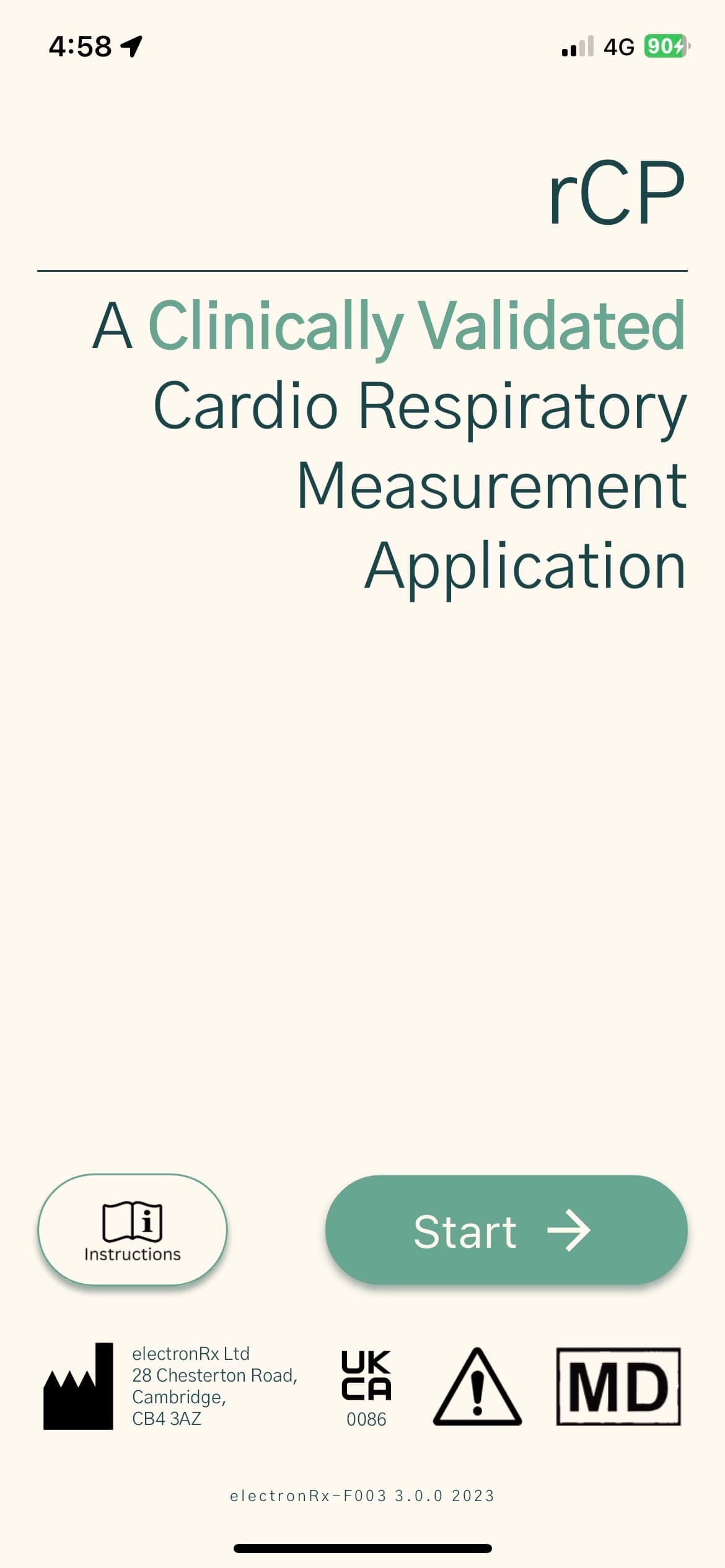
rCP, in the hand
A walkthrough of the app I implemented — the front end engineers and users actually touch.
The journey
A year of progressive responsibility, ending in the lead chair
From first production feature to running the team — each step earned the next.
- Step 1Start of placement
Learned Flutter & Dart
New to the stack, I taught myself Flutter and Dart at speed — first building a throwaway app containing all the functionality I'd later need, so I'd learned the stack before touching production code.
- Step 2Early placement
First production feature
Built an educational page from scratch alongside a fellow junior developer. The articles lived in the cloud and cost money on every download, so I structured it to fetch each article as few times as possible — my first taste of weighing engineering decisions against cost.
- Step 3Throughout
Explaining the build to non-engineers
I wrote short, diagram-led documents so non-technical colleagues — up to the CEO — could understand how features worked. Translating engineering into plain language became a recurring part of the role.
- Step 4Quality-system work
Usability documentation
Given the Usability Lead title, I authored three of the quality system's usability documents — the Instructions for Use, the User Interface Specification and the Task & Use-Related Risk Analysis — that fed the medical-device submission.
- Step 5End of February
ISO 13485 certified
The company achieved ISO 13485 certification — the quality-management standard for medical devices — an effort the usability work I contributed to fed into.
- Step 6Mid placement
Testing & code-structure rewrite
Helped migrate the codebase into new, testable repositories — writing tests under the guidance of the test engineer to make future changes faster and safer to ship.
- Step 7Later placement
Full front-end redesign
Trusted to implement the entire front end from scratch in Flutter/Dart during a complete redesign of all nine of the app's pages — built to be intuitive, cross-platform and compliant with BSI standards.
- Step 8End of placement
Trial, leading the team & BSI submission
Designed a public usability validation trial to BSI standards, and — chosen from the five engineers — led the dev team while the lead engineer was away: assigning work, reviewing all code, managing TestFlight and hitting every deadline. rCP was submitted to the BSI for UKCA marking, later going live as PurpleDX.
What I did
Hired as a front-end developer — bandwidth expanded across the year
I was hired to build the front end. Over the year my remit widened dramatically: because I came to understand the app and its process so well, I was pulled into the documentation, research and leadership a medical device demands — and, out of the five engineers, I was the one asked to lead the team while the lead software engineer was away.
Front-end implementation
- Almost all of the app's front end, in Flutter/Dart
- Implemented all 9 pages in a full redesign
- Cross-platform (iOS / Android)
- Reviewed the team's pull requests
Quality & documentation
- Three usability docs feeding the ISO 13485 QMS
- Instructions for Use & UI Specification
- Task & Use-Related Risk Analysis
- Helped migrate code into testable repositories
Research & delivery
- User research & interviews
- Designed the usability validation trial
- Trained two incoming engineers in Flutter/Dart
- Led the team + TestFlight in the lead's absence
The challenge
Turning a consumer app into a regulated medical device
rCP measures cardiac metrics using only a phone's sensors. To be submitted to the BSI for UKCA marking, it couldn't just work — it had to be demonstrably safe, intuitive and fully documented to ISO 13485 standards.
What that demanded
- A front end rebuilt to be intuitive and compliant with BSI standards.
- A full usability-documentation set written to ISO 13485.
- Evidence — a validation trial — that real users could navigate it safely.
- A codebase clean and tested enough to ship changes with confidence.
Where I fitted in
I owned the front-end implementation and — as Usability Lead — authored the usability documents that fed the submission.
The backend was built by the wider team; my contribution sat across the app the user touches and the documentation that proved it was fit to be a medical device.
How it's built
Where my work sat in the stack
rCP reads cardiac metrics from a phone's sensors and surfaces them back to the user. I implemented the front end; the backend was built by the wider team.
Phone sensors
Captures the raw signals from the user's own phone — no extra hardware.
rCP app — Flutter / Dart
The cross-platform front end. Almost all of it implemented by me across the redesign.
Backend & cloud — Firebase
Processing, storage and the data model beneath the app — built by the wider team, with my input on the data model design.
Cardiac metrics
Results surfaced back to the user inside the app.
Quality & regulatory
Built to medical-device standards
rCP sits on the path of a clinical measurement, so the bar was higher than 'it works'. As Usability Lead I contributed the documentation and research behind the submission — work that fed the company's ISO 13485 certification and the BSI filing.
ISO 13485 quality system
Certified during my time — the medical-device quality standard the usability work fed into.
Usability documentation
Three core documents — Instructions for Use, User Interface Specification and Task & Use-Related Risk Analysis — authored as Usability Lead.
Usability validation trial
A public study designed to BSI standards to evidence that real users could navigate the app safely.
Submitted to the BSI
rCP submitted to the BSI for UKCA marking — and since gone live, rebranded as PurpleDX.
Leadership & collaboration
Trusted with the team, not just the code
I came to know the app and its process well enough that — out of all five engineers — I was the one chosen to lead while the lead software engineer was away.
Running the build
- Chosen, out of the five engineers, to lead the team while the lead software engineer was away — assigning work, unblocking people and hitting every deadline.
- Put in charge of reviewing all code submitted during that period, on top of my usual pull-request reviews.
- Managed the app's development and submission to TestFlight.
Bringing people up to speed
- Trained two engineers joining the team — one a React developer — into Flutter and Dart ownership through paired programming.
- Helped embed the company’s tools and ways of working as part of that onboarding.
- Represented the company at Cambridge start-up networking events.
Judgment under pressure
When a redesign didn't go to plan — and the call we made
Not everything ran smoothly. What mattered was triaging the problem against the schedule, rather than letting one page derail the wider plan.
What happened
Redesigning the wellness page, I found a section that didn’t work at all. Fixing it properly would have taken far more time than was allocated — and pressing on was already pushing my other work behind schedule.
The call we made
Rather than let one page hold up everything else, we agreed to log the deeper issue for later investigation and keep me on schedule. I recovered the lost ground by solving a later problem faster than planned.
What I took from it
A sharper instinct for triaging scope against time — knowing when a deeper fix is worth deferring to protect a delivery date, and being honest with the team about that trade-off.
Reflection
What rCP taught me
“I left the placement fluent in Flutter, Dart and Firebase, and with a real sense of what it’s like inside a start-up putting a regulated product into the world.”
“I was hired as a front-end developer, but over the year my bandwidth expanded dramatically. Because I came to understand the app and its process so well, I kept being pulled into the work around the code — the usability documentation, the validation trial, explaining the build to non-technical colleagues — and, out of the five engineers, I was the one asked to lead the team while the lead software engineer was away. Shipping under real-world regulatory constraints, owning delivery end to end, sitting between users, regulators and engineers — those are the parts I want to keep building on.”
External validation
I closed the year with a 30-minute presentation and Q&A on the project to most of the company — assessed by Loughborough University and awarded an A grade, with very positive feedback.